This past week was spent inside the amazing Town Hall – the epicentre of the Dunedin Centre complex – for the New Zealand Planning Institute annual conference. For several days I was privileged to listen to talks from some of the world’s leading urban design experts, sociodemographic geniuses, environmental thought leaders and experts in bringing clarity to the sometimes hazy prospect of the future of humanity.
It was crystal-ball gazing with an assembly of some of the greatest thinkers of our time. I learnt a lot.
Our future is going to be defined by the mix of our population rather than its volume alone. As the baby boomers begin to enter the retirement phase the next generation is shrinking and there is a gap – a large gap – in making those two ends meet. Socially, we’re in for some turbulence.
From an environment perspective the leading scientists are making pleas for change to our policies and way of life to bring the pendulum back into balance. Yes, there is a tide of economy driven counter arguments, but the signposts are plentiful: extreme and more frequent weather events, sea-level rise, contaminated fish stocks, soaring CO2 levels – the list goes on. If we don’t change how we live and how we consume resources then we will leave future generations with a broken, defunct planet. We’ve become a plague – an ignorant species focused acutely on self. One scientist believes if we can wean ourselves from fossil fuels by 2030 then we can change the course for the better. Can we do that? In just 14 years? Environmentally, we’re in for some turbulence.
That leaves the final measure of the success of our species: the economy. A dubious measure, but important to our obsession with capitalism. Global markets are struggling, some on the verge of collapse and the need for growth has never been more urgent, more contentious, or made less sense. But regardless, this is the hook the current generation of power hangs its hat on and so, like lambs to the slaughter, we wander aimlessly into the future with social and environment concerns mere thorns in the side of the juggernaut of capitalism.
But for the hundreds of planners assembled in Dunedin to learn how they might plot the course for future generations, there is hope. The tide has already turned here it seems and a new generation is finding its wings. Let’s hope they thrive and bring social, environment and economy to the forefront for the betterment of our future generations. Let’s hope we all stop and think.
See you at the beach … Derek
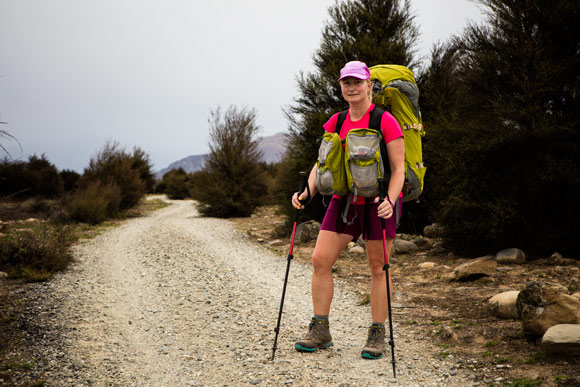
PS Escaping from the mind-bending of a week of conference shooting I escaped to Hawea for the weekend and met the very impressive Kelly Purdie (aka The Lost Pom), who is 1100km into her 4500km walk around New Zealand, out on the Hawea Track. She is raising awareness for Juvenile Parkinson’s Disease – a very rare disease that has affected her sister Tracey since she was just 15. I like people stepping outside their comfort zone for a good reason. Support her cause right here and if you see her on her travels, stop and say hello.

Proudly supported by: